Breaking Down the Broncos’ Ceiling and Floor in 2026

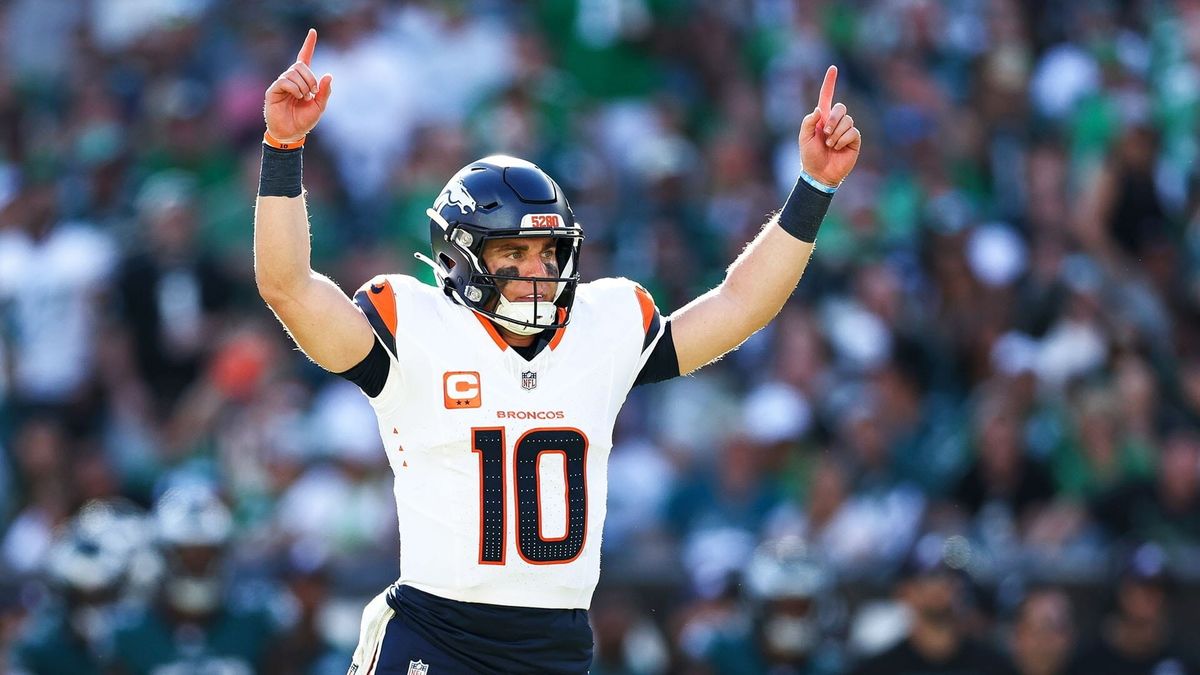
The Denver Broncos enter the 2026 season with expectations that have not existed in years. After winning the AFC West in 2025 and proving they could finally knock off the Kansas City Chiefs atop the division, the Broncos are no longer viewed as an up-and-coming team – they are expected to contend.
That creates an interesting question entering the season: what is Denver’s realistic ceiling and floor in 2026?
For the first time in a long time, the Broncos have a roster talented enough to envision multiple outcomes. If everything breaks right, Denver has the pieces to compete for a championship. If key offensive questions go unanswered, however, the Broncos could still find themselves fighting simply to return to the postseason.
Ceiling: 14-3 and Super Bowl LXI Champions
Denver’s ceiling is as high as almost any team in the NFL because the Broncos already possess one thing every true contender needs: an elite defense.
Led by Patrick Surtain II, Nik Bonitto, and Zach Allen, Denver’s defense projects to once again be one of the league’s premier units in 2026. Most of the core from the 2025 defense returns, giving the Broncos continuity, chemistry, and proven production at every level.
Barring significant injuries, this defense should keep Denver competitive nearly every week. The Broncos can rush the passer, create turnovers, and match up against high-powered offenses – all traits that championship teams typically possess.
That said, even Denver’s ceiling comes with realistic limitations because of the schedule.
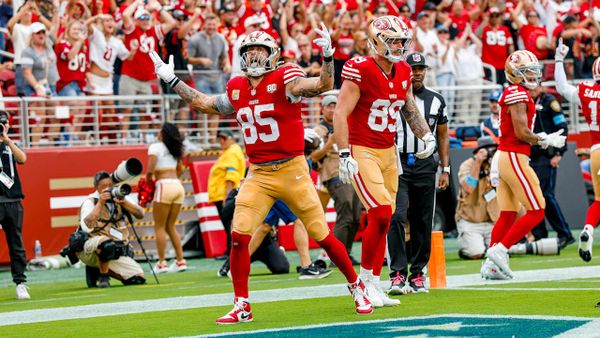
An undefeated season is not a realistic expectation for the Broncos given the gauntlet they will face throughout the year. Denver opens the 2026 campaign against the Kansas City Chiefs at Arrowhead Stadium before entering a brutal stretch featuring five consecutive games against teams that reached the postseason in 2025 – including the Los Angeles Rams, San Francisco 49ers, and Seattle Seahawks.
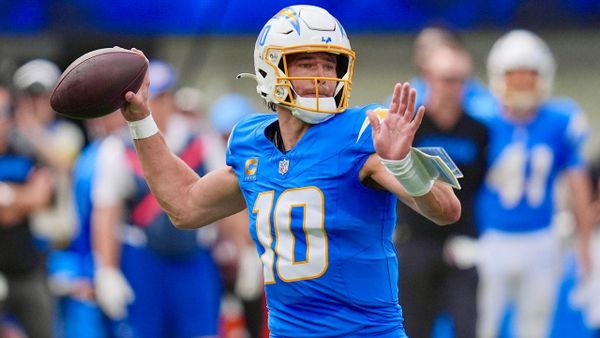
And the difficulty doesn’t let up late in the year. The Broncos close the regular season with a demanding three-game stretch against postseason-caliber opponents, facing the Buffalo Bills in Week 16, the New England Patriots in Week 17, and the Los Angeles Chargers in Week 18 – all teams that made the playoffs in 2025.
Put simply, Denver’s margin for error is going to be slim all season long. That context matters because it shifts the conversation from raw win totals to sustainability – whether the Broncos can consistently win the kinds of high-leverage games that separate contenders from playoff teams.
And when you zoom in on that reality, it becomes clear that Denver’s entire ceiling is ultimately tied to one variable above all others: the development of Bo Nix in Year 3.
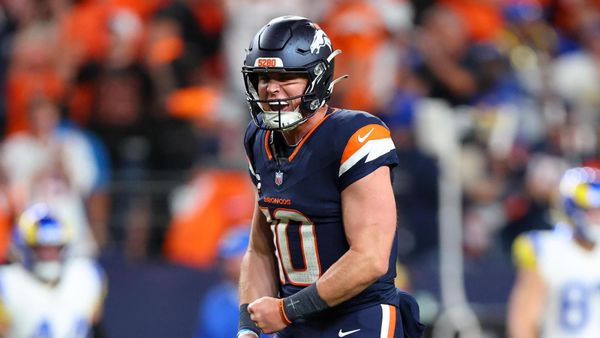
Strip everything away, and the Broncos’ 2026 ceiling comes down to one question: does Nix make the leap into an MVP-caliber quarterback in Year 3?
If Nix evolves from a promising young quarterback into a legitimate MVP candidate, Denver suddenly becomes one of the NFL’s most dangerous teams. The Broncos do not necessarily need Nix to become a player identical to Drew Brees, but if he reaches that level of command, efficiency, and timing within the offense, the sky is the limit.
Denver has surrounded Nix with significantly more firepower entering 2026.
Courtland Sutton remains one of the league’s more reliable contested-catch threats, while Jaylen Waddle gives the Broncos a dynamic speed threat capable of changing games after the catch. If both wideouts surpass 1,000 receiving yards, Denver could field its best wide receiver duo since Demaryius Thomas and Emmanuel Sanders.
The offensive line also gives the Broncos reason for optimism. Anchored by Garett Bolles and Quinn Meinerz, Denver possesses the kind of physical front capable of controlling games in both pass protection and the run game.
That becomes especially important for J.K. Dobbins.
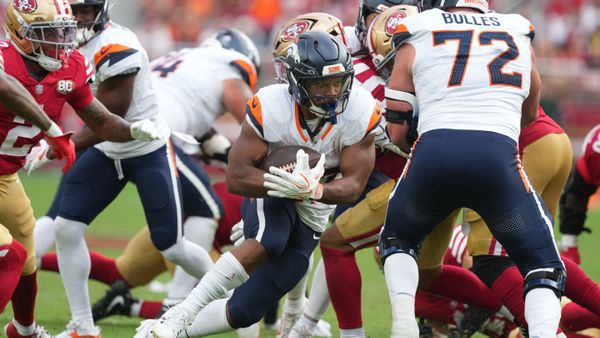
When healthy, Dobbins is one of the NFL’s most explosive runners. If he can stay on the field throughout the season, the Broncos’ offense could become extremely difficult to defend – particularly if Denver successfully rotates running backs to keep everyone fresh. A healthy Dobbins alongside young contributors like RJ Harvey and Jonah Coleman could give the Broncos a legitimate three-headed rushing attack.
The tight end position also carries intriguing upside.
After a disappointing 2025 season, Evan Engram could rebound and return to Pro Bowl form as a reliable security blanket for Nix over the middle. If that does not happen, Denver still has young developmental options like Justin Joly or Dallen Bentley who could emerge unexpectedly.
If all of those pieces click simultaneously, the Broncos’ ceiling becomes very real.
Floor: 9-8 and Missing the Playoffs
Even with Denver’s talent, there are still enough questions offensively to prevent the Broncos from being viewed as a flawless contender.
The biggest concern is what happens if Nix regresses.
Quarterback development is rarely perfectly linear, and the pressure surrounding Nix entering 2026 will be significantly different than anything he has previously experienced. Expectations are now elevated. Opposing defenses will spend all offseason studying how to counter Denver’s offensive tendencies and force Nix into uncomfortable situations. If he struggles with consistency, forces throws, or fails to elevate the offense in high-pressure moments, the Broncos could find themselves leaning too heavily on their defense.
Denver’s margin for error offensively also shrinks considerably if injuries begin piling up in the backfield.
Dobbins has battled durability concerns throughout his career, and another significant injury would dramatically alter the offense. If Coleman is not ready to handle an expanded workload, the Broncos could become increasingly one-dimensional offensively.
That would force Nix to create outside structure more often – including relying on his legs in ways Denver would prefer to avoid. While Nix’s mobility is an asset, exposing him to excessive hits over the course of a season is not a sustainable formula for long-term success.
The Broncos also need Waddle to become a true difference-maker within the offense.
Adding a player with Waddle’s explosiveness raises Denver’s ceiling considerably, but that impact still needs to materialize on the field. If he struggles to build chemistry with Nix or fails to consistently produce within the system, the Broncos’ passing attack could remain good rather than becoming elite.
Still, what separates Denver from many other teams with offensive uncertainty is the reliability of its defense.
Even if the offense underwhelms at times, the Broncos’ defense feels talented enough to prevent a total collapse. Denver should remain competitive because its defensive core provides a consistently high baseline every week.
That is why the Broncos’ floor still feels relatively high compared to most teams across the league.
A 9-8 finish, third place in the AFC West, and narrowly missing the playoffs feels like the realistic worst-case scenario for Denver if several offensive concerns emerge simultaneously.
Final Thoughts
The Broncos enter 2026 as one of the NFL’s more fascinating teams because their range of outcomes is so compelling.
Their defense already looks championship-caliber. Their offensive line is built to compete deep into January. Their roster contains legitimate playmakers on both sides of the ball.
Ultimately, however, Denver’s season will be defined by the development of Bo Nix and whether the Broncos’ offense can evolve from solid to elite.
If it does, Denver has the talent to win the Super Bowl.
If it does not, the Broncos are still likely good enough to remain competitive – but perhaps not dangerous enough to survive a loaded AFC playoff field.
In a season defined by an elite defense and a punishing schedule, Denver’s identity is already clear – the only question is whether Nix can turn it from dangerous to unstoppable.