What the Broncos’ Surprising Roster Cuts Say About Their 2026 Draft Class

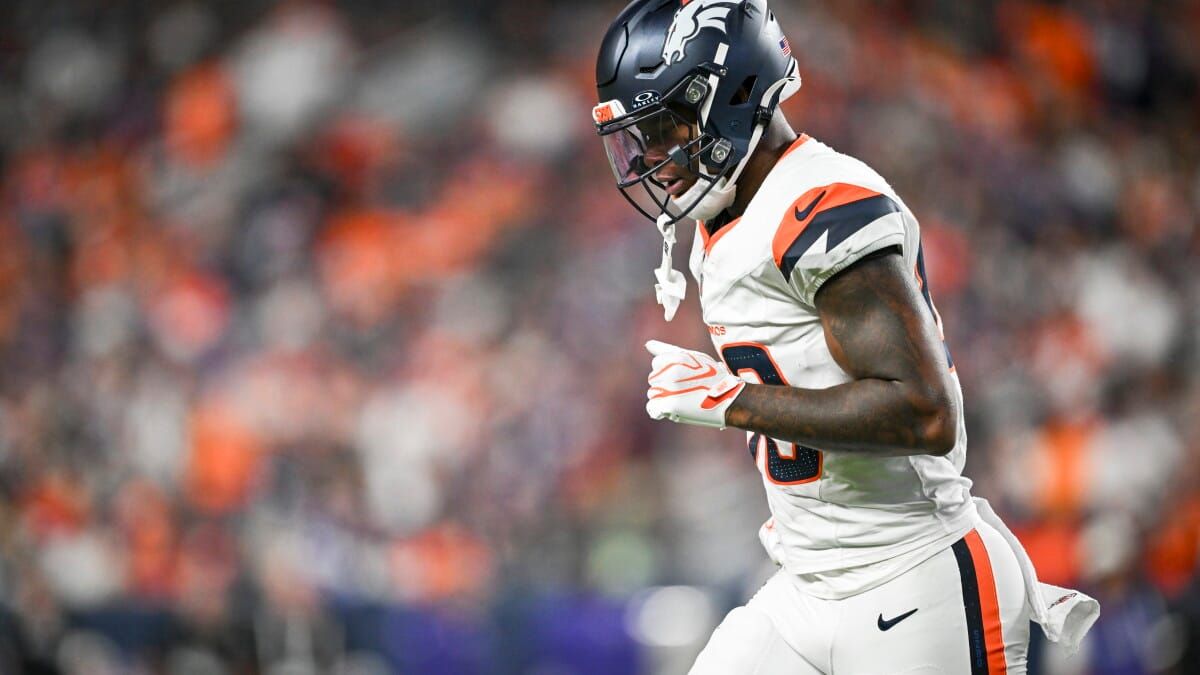
The Denver Broncos entered the 2026 NFL Draft with only seven picks and no selections in the first two rounds. With such limited draft capital, each selection carried a little more weight.
That made Sunday’s roster decisions particularly noteworthy.
Denver waived three of its seven draft picks – tight end Justin Joly, safety Miles Scott and linebacker Red Murdock – before the team’s Week 1 matchup with the Kansas City Chiefs.
None of those decisions necessarily means the Broncos’ 2026 draft class is a failure. It is far too early to make that judgment.
But the fact that three of seven draft picks failed to make the initial 53-man roster is certainly not what Denver envisioned when it made those selections in April.
And two of those three cuts were especially difficult to see coming.
Justin Joly’s Departure Is the Biggest Surprise
Justin Joly’s path to the roster seemed relatively straightforward entering training camp.
The Broncos traded up to select Joly in the fifth round at No. 152 overall, and Denver’s tight end room did not exactly appear to have an obvious No. 2 option behind Evan Engram.
That made Joly a logical candidate to emerge as Engram’s primary backup.
Then came the preseason finale.
Joly caught an 88-yard touchdown pass against the Minnesota Vikings, providing perhaps the most memorable play of his young career. The play was aided by a blown coverage, so it would be foolish to suggest that one touchdown should have guaranteed him a roster spot.
Still, it made Sunday’s decision feel strange.
The Broncos ultimately decided that Joly was not one of their four tight ends worth keeping. Instead, Denver retained Evan Engram, Adam Trautman, Dallen Bentley and Nate Adkins.
That’s where the bigger question comes in.
So what changed between April, when the Broncos made Joly their fifth-round pick, and August, when they decided to move on from him?
That’s difficult to answer from the outside. Denver had months of practices and meetings to evaluate Joly, and the coaching staff may have seen shortcomings that weren’t as obvious during the preseason games.
One potential issue was Joly’s blocking. It was already considered a weakness coming out of college, and if he failed to make enough progress in that area during training camp, it could have limited his ability to earn a roster spot. The Broncos may have simply determined that his receiving ability wasn’t enough to offset his shortcomings as a blocker.
Fifth-round picks aren’t guaranteed a spot on the 53-man roster, but they typically make the team, particularly when they play a position with a clear need for depth. Denver also traded up to select Joly, making his release even more noteworthy. It’s possible – if not likely – that the Broncos determined Joly’s limitations as a blocker outweighed the potential he showed as a receiver.
But that doesn’t make the decision irrelevant.
Joly was drafted with a specific skill set in mind. He was supposed to provide athleticism and receiving ability at a position that could use another weapon. If Denver determined that he still had too much work to do as a complete tight end, it’s an important early evaluation of one of its 2026 draft picks.
And considering the Broncos’ tight end depth, his inability to earn a roster spot is difficult to ignore.
Red Murdock Is an Even More Interesting Case
Red Murdock’s release might be even more surprising because he appeared to solve a problem Denver actually had.
The Broncos selected Murdock with the final pick of the 2026 NFL Draft. As Mr. Irrelevant, he was never expected to walk into Denver and become a star.
But his preseason performance suggested he could provide something the Broncos needed: depth at inside linebacker.
Murdock finished the preseason with 20 total tackles across three games and consistently seemed to be around the football.
For a seventh-round pick competing for a backup role, that was exactly the kind of performance that could force a coaching staff to keep him around.
Instead, Denver waived him.
The decision is particularly noteworthy because the Broncos’ inside linebacker depth was one of the roster’s biggest questions entering training camp. Alex Singleton and Justin Strnad were the projected starters, but Denver needed to figure out who could provide meaningful depth behind them.
Murdock appeared to have a chance to fill that role.
Instead, the Broncos kept Karene Reid and Jordan Turner behind Singleton and Strnad.
That says something important about how Denver evaluated Murdock.
His tackle production clearly wasn’t enough to overcome whatever concerns the coaching staff had about his overall game.
That’s an important distinction.
Preseason production can tell only part of the story.
The Broncos apparently saw a player who could find the football but still had significant limitations that made it difficult to trust him with a roster spot.
That is a much more interesting evaluation than the box score suggests.
Miles Scott Is Less Surprising
Miles Scott’s departure doesn’t carry quite the same weight.
Denver selected him 246th overall, and his path to the 53-man roster was always going to be difficult. The Broncos had several players competing for the final safety spots, and Scott was always more of a developmental prospect than an immediate contributor.
That’s why his release shouldn’t necessarily be lumped in with Joly and Murdock.
Seventh-round picks are long shots to begin with, and Scott had plenty of competition ahead of him. Denver ultimately determined that other players offered more value to the 53-man roster right now.
That doesn’t mean the pick was a mistake.
It may simply mean the Broncos believe Scott needs more time before he can contribute meaningfully in the NFL.
If Denver is able to retain him on the practice squad, the Broncos can continue developing him without using one of their 53 roster spots on a player who isn’t ready to contribute.
That makes Scott’s situation considerably less concerning than Joly’s or Murdock’s.
It’s Too Early to Call the Draft a Failure
There is a temptation to look at Sunday's cuts and immediately declare Denver’s draft class a disappointment.
That would be an overreaction.
Tyler Onyedim, Jonah Coleman and Kage Casey have not played a meaningful NFL game yet. Dallen Bentley remains on the roster. Justin Joly, Miles Scott and Red Murdock could all return to the Broncos’ practice squad and continue developing.
Denver also had unusually difficult roster decisions to make, as the Broncos are coming off a 14-3 season and had more depth competing for roster spots.
Sean Payton has previously emphasized that Denver must “find the right and the best 53” when evaluating the roster as a whole. That’s an important consideration when assessing these cuts, because the Broncos clearly weren’t going to keep Joly, Murdock or Scott simply because the team had invested draft picks in them.
Denver’s roster decisions reflect that philosophy.
But draft picks are supposed to become part of that best 53 eventually.
And for now, three of the Broncos’ seven 2026 selections are on the outside looking in.
That doesn’t mean Denver botched those picks. It doesn’t mean Joly, Murdock or Scott won’t eventually become NFL contributors. And it certainly doesn’t mean the entire 2026 draft class is destined to fail.
It does mean the early returns are underwhelming.
The Broncos had only seven picks, making each selection particularly valuable. Three of them won’t begin the season on the 53-man roster, and two of those three – Joly and Murdock – had seemingly legitimate paths to earning roster spots.
That’s worth watching.
Denver doesn’t need its entire 2026 draft class to become immediate contributors. The Broncos simply need some of these players to eventually become contributors.
For now, though, the first chapter of this draft class has taken an unexpected turn.
And we’ll have to wait to see whether these surprising cuts ultimately prove to be smart roster-building decisions or missed opportunities.