Why Signing Cameron Jordan Would Make Sense for the Broncos

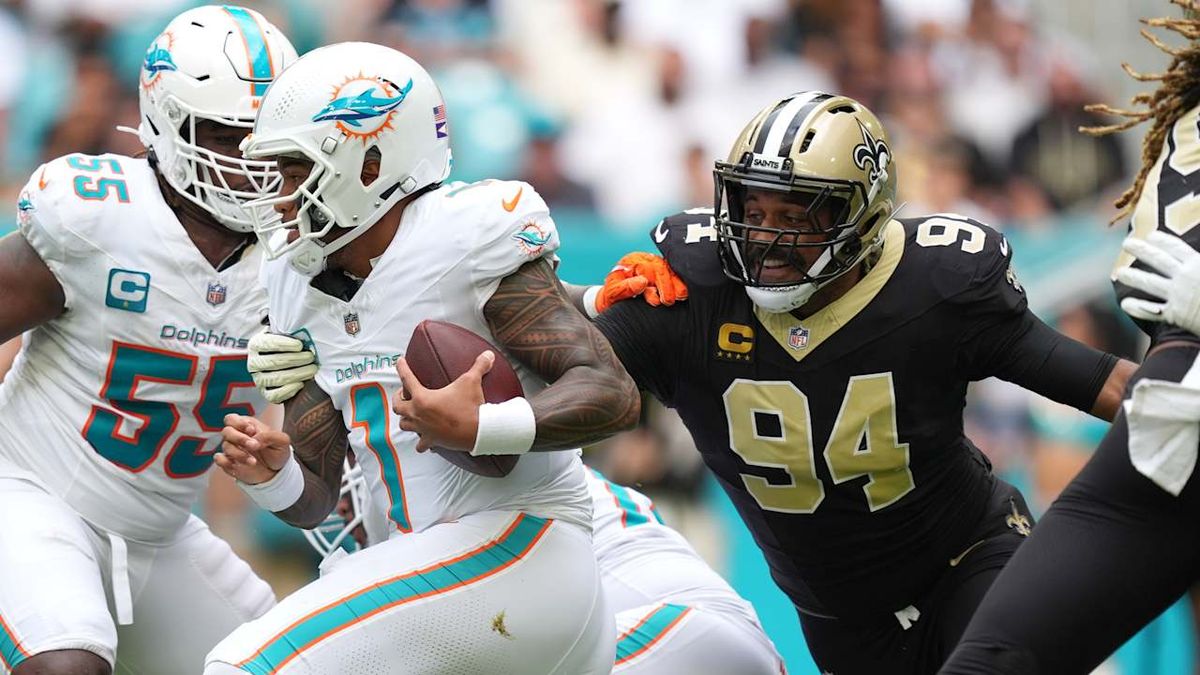
The Denver Broncos don’t need to make a splashy, headline-driven move at edge rusher – but they should consider one that makes a lot of sense.
That move? Signing eight-time Pro Bowler Cameron Jordan.
Jordan, now 36, isn’t a speculative addition. He’s one of the most productive and durable defensive linemen of his era, tallying 132 career sacks while missing just two regular-season games across his first 15 NFL seasons. Even last season, he recorded 10.5 sacks – production that suggests he’s still capable of impacting games at a meaningful level.
This wouldn’t be a bet on what he used to be. It would be a bet on what he still is.
Why the Fit Makes Sense in Denver
The Broncos already invested in the future by selecting former Texas A&M Aggies defensive lineman Tyler Onyedim with the No. 66 overall pick in the 2026 NFL Draft. But after the departure of John Franklin-Myers, expecting a rookie – particularly one whose strengths lean more toward run defense – to immediately help replace that level of pass-rush production is a risky approach.
Onyedim profiles as a physical, gap-disciplined defender who can hold up at the point of attack. What he is not – at least right now – is a refined edge rusher who consistently wins in obvious passing situations.
Jordan still offers that.
At this stage of his career, Jordan wins differently than he once did. It’s less about burst and more about technique – hand usage, leverage, counters, and an advanced understanding of how to attack protections. Those traits tend to translate more reliably late into a player’s career, especially in defined roles.
For Denver, that distinction matters. The Broncos don’t necessarily need volume – they need dependability in high-leverage moments.
The Short-Term vs. Long-Term Balance
There’s no getting around the reality: signing a 36-year-old edge rusher is not a long-term solution.
But that may not be the point.
Denver is in a position where raising the floor of the current roster is just as important as building toward the future. A player like Jordan wouldn’t need to play every snap – he would need to be right when it matters most. Third downs. Late-game situations. Key possessions where pass rush consistency becomes the difference.
That kind of role clarity doesn’t just help Jordan – it helps everyone around him. It allows younger players like Onyedim to develop without being forced into responsibilities they’re not fully ready to handle.
The Sean Payton Connection
Perhaps the most compelling part of this potential move isn’t schematic – it’s relational.
While Broncos head coach Sean Payton built his reputation on the offensive side of the ball, his long-standing connection with Jordan from their time together with the New Orleans Saints still carries weight. Jordan wasn’t just productive during that span – he was a constant. A leader, a tone-setter, and a player the organization relied on year after year.
That kind of history matters.
There’s an established level of trust and understanding that goes beyond scheme fit. Payton knows what Jordan brings – not just on game day, but in preparation, communication, and situational football. For a veteran player, that familiarity can be the difference between fitting into a roster and elevating it.
A Move That Strengthens Denver – and Thwarts an AFC West Rival
There’s also a strategic layer to this decision that extends beyond the Broncos’ own roster.
The Kansas City Chiefs have been connected to the veteran pass rush market as they look to reinforce their defensive front. A player like Jordan fits that profile – experienced, still productive, and capable of contributing immediately in a rotational role.
That’s what makes this a potential two-for-one scenario for Denver.
If the Broncos sign Jordan, they’re not just adding a reliable edge presence – they’re also removing a viable upgrade path for a division rival. In an AFC West that is often decided by narrow margins, those kinds of incremental advantages matter.
Still, that can’t be Denver’s primary motivation. Moves made purely to block opponents tend to backfire. But when a decision already makes sense on its own merits – production, role fit, and familiarity – the added benefit of limiting a rival’s options becomes part of a smarter, more complete equation.
The Risk Is Real – But So Is the Upside
There’s inherent risk in betting on a 36-year-old player. Decline can be sudden, and edge rusher is not a position that always ages gracefully.
But Jordan isn’t a typical case.
A player coming off a 10.5-sack season, with a history of durability and a well-defined skillset, presents a different kind of evaluation – one based less on projection and more on known value.
For a Broncos team trying to close the gap between potential and consistency, that’s the kind of calculated move worth making.