2026 Week 7 Recap: Five Key Takeaways from the Broncos’ Encouraging 30-16 Win Over Arizona

The Denver Broncos (5-2) entered their Week 7 matchup against the Arizona Cardinals (2-5) looking to extend their winning streak and find a spark on offense. After an inconsistent start to the year, Denver had an opportunity to make a statement against an Arizona team looking to find its footing.
The Broncos took care of business, earning a 30-16 victory over the Cardinals at State Farm Stadium. While the result was encouraging, Sunday’s game also offered plenty for Denver to evaluate as it prepares for a pivotal divisional matchup in Week 8.
Here are five key takeaways from the Broncos’ Week 7 victory over Arizona:
1. Denver’s Offense Took a Step in the Right Direction
The Broncos’ offense delivered one of its most encouraging performances of the season, as Denver finished with 30 points and 378 total yards. After struggling to consistently move the ball during the opening weeks of the campaign, the Broncos showed an improved ability to generate explosive plays and capitalize on scoring opportunities.
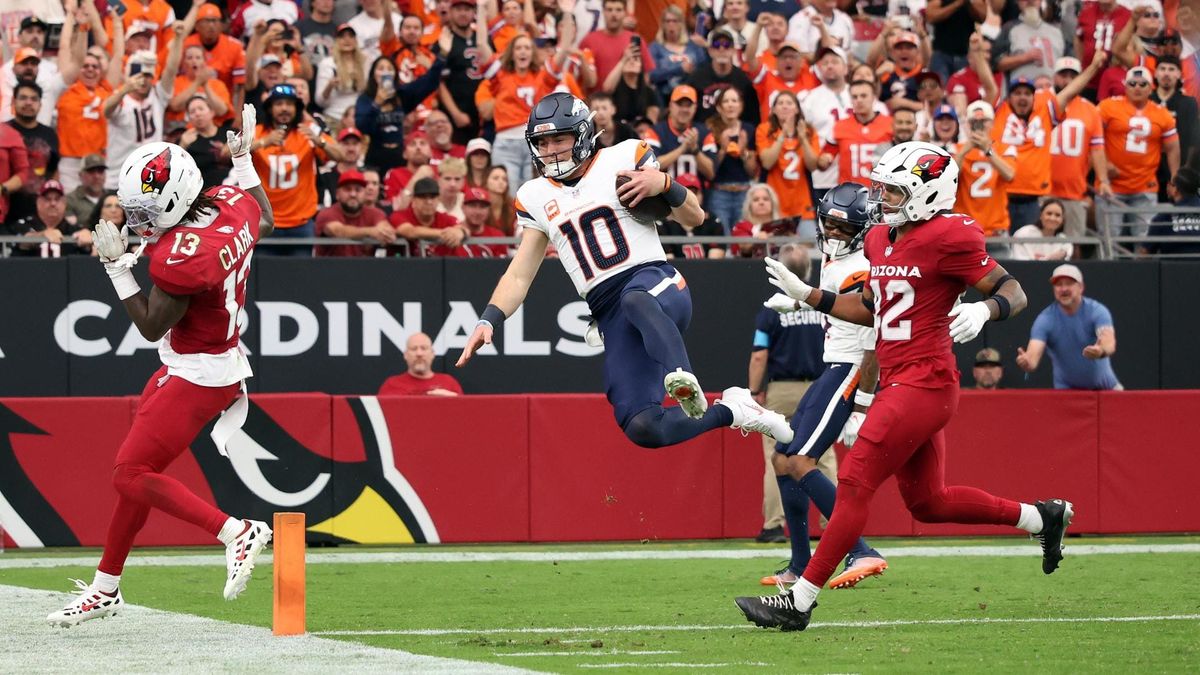
Bo Nix led the way, completing 15 of 29 passes for 222 yards and a touchdown while adding 74 rushing yards and another score on seven carries. His 62-yard touchdown run late in the first half was one of the game’s defining plays, giving Denver a 13-6 lead and providing an encouraging glimpse of his mobility.
Nix’s rushing production was particularly noteworthy considering the ankle injury he suffered during the 2025 postseason. He appeared to be hampered by the lingering effects during the Broncos’ first six games of 2026, recording just 37 rushing yards over that span. His performance against the Cardinals suggests he may finally be moving more freely, although it remains to be seen whether he can sustain that level of mobility throughout the season.
Denver also found success through the air. Nix connected with RJ Harvey on a screen pass that the second-year running back turned into a 52-yard touchdown with 10:26 remaining in the third quarter. On the final play of the period, J.K. Dobbins punched in a one-yard rushing touchdown to extend the Broncos’ lead.
Those explosive plays helped Denver produce points without needing to string together lengthy drives on every possession. That is an important development for an offense that has struggled to find consistency throughout the season.
One productive outing does not mean the Broncos have solved all of their offensive problems. Nix’s passing efficiency remains an area to monitor, and Denver must show it can sustain this level of production against stronger opponents. Nevertheless, Sunday’s performance was a meaningful step forward for an offense that needed to find another gear.
2. Jonah Coleman’s Return Made an Immediate Impact
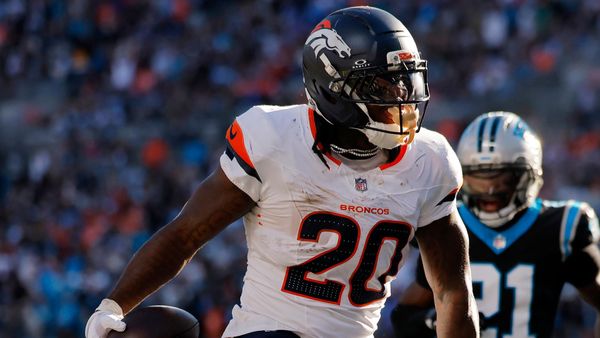
Jonah Coleman provided a welcome boost to the Broncos’ running game in his return from injured reserve. The rookie recorded 54 yards on nine carries, averaging six yards per attempt, while adding two receptions for 15 yards.
Coleman’s efficiency was particularly encouraging given Denver’s recent struggles to establish a consistent ground game. Without a productive rushing attack, opposing defenses can zero in on the passing game, making life more difficult for Nix and the Broncos’ offense.
Against Arizona, Denver finished with 159 rushing yards on 26 attempts, averaging 6.1 yards per carry. Coleman contributed to that improvement, while Nix’s long touchdown run and J.K. Dobbins’ score rounded out a productive afternoon on the ground.
Coleman’s most notable contribution may have come late in the fourth quarter. His 15-yard run was the longest rushing attempt by a Denver running back on the day and forced the Cardinals to use their second timeout of the second half.
Coleman’s return gives the Broncos another option to pair with Dobbins and RJ Harvey. A deeper backfield could help Denver distribute carries more effectively, keep its running backs fresh and create additional opportunities for explosive plays.
It remains to be seen whether the Broncos can sustain this level of rushing efficiency against tougher defenses. Still, Coleman’s return was an encouraging development for a team that needs its ground game to become a more reliable part of the offense.
3. Denver’s Defense Made Life Difficult for Jacoby Brissett
The Broncos’ defense once again played a major role in securing the victory, consistently pressuring Arizona quarterback Jacoby Brissett and limiting the Cardinals’ ability to capitalize on scoring opportunities.
Arizona managed to move the ball at times, finishing with 353 total yards, but Denver repeatedly forced the Cardinals to settle for field goals or come away empty-handed. Arizona kicked three field goals, punted five times and turned the ball over on downs twice in the fourth quarter.
The Broncos recorded three sacks and 13 quarterback hits, making it difficult for Brissett to operate comfortably in the pocket. Alex Singleton led the defensive effort with 19 total tackles, including 12 solo tackles, a sack, a tackle for loss and two quarterback hits. His activity around the football made him a significant presence throughout the afternoon.
Singleton’s biggest contribution came in the closing minutes, when he helped seal the victory for Denver. With Arizona facing second-and-goal at the Broncos’ 1-yard line and just 1:30 remaining, Singleton sacked Brissett for a four-yard loss. The Cardinals turned the ball over on downs two plays later, allowing Denver to take possession and run out the clock. Singleton’s sack proved instrumental in putting the game away.
The defensive performance was not flawless, but the Broncos’ ability to generate pressure and make critical stops remains a strength. With the Kansas City Chiefs visiting in Week 8, the Broncos will need their pass rush to remain disruptive against the division rival that defeated them convincingly in the season opener.
4. Penalties Continue to Undermine Denver
Despite the encouraging offensive performance, the Broncos’ penalty problems remain a significant concern. Denver was flagged 11 times for 114 yards against Arizona, a costly total that repeatedly made the Broncos’ afternoon more difficult than necessary.
The issue was not entirely new. Through its first six games, Denver had already been penalized 44 times for 269 yards. Sunday’s 11 penalties for 114 yards added to those totals, reinforcing the need for the Broncos to become more disciplined.
Some of the penalties directly affected Denver’s ability to sustain drives. During the opening possession, an offensive pass interference penalty erased a 19-yard gain that would have moved the Broncos to the Cardinals’ 1-yard line. Instead of having a prime opportunity to score a touchdown, Denver lost valuable field position and ultimately settled for a field goal.
Defensive penalties also proved costly. Late in the third quarter, a 25-yard pass interference penalty against safety Brandon Jones moved Arizona to the Broncos’ 5-yard line. The Cardinals scored their only touchdown of the afternoon just two plays later.
These mistakes illustrate how quickly penalties can change the course of a game. An explosive offensive play can be erased, a promising drive can stall, or a defense can be forced to defend a short field. Even when Denver is playing well in other areas, those errors give the Broncos’ opponents opportunities they might not otherwise receive.
Denver overcame its penalty problems to secure the victory, but that will not always be the case. Against more efficient opponents, repeated mistakes could easily become the difference between winning and losing.
The Broncos have shown they can generate explosive plays and capitalize on scoring opportunities. Now they need to pair that progress with better discipline if they want to turn encouraging performances into sustained success.
5. Injuries to Jaylen Waddle and Zach Allen Could Have Major Implications
Denver left Arizona with a victory, but injuries to wide receiver Jaylen Waddle and defensive lineman Zach Allen could complicate preparations for Kansas City.
Waddle suffered a chest injury in the fourth quarter and did not return. Before leaving the game, he recorded four receptions for 48 yards on seven targets. His speed and ability to generate explosive plays have added another dimension to the Broncos’ passing attack, complementing Courtland Sutton and the team’s other receiving options.
If Waddle misses time, Denver could lose an important source of big-play potential just as its offense appears to be finding its footing. Sutton, Marvin Mims Jr. and the rest of the receiving corps could be asked to shoulder a greater share of the workload. The Broncos could also lean more heavily on their running game to compensate for Waddle’s absence, particularly after Bo Nix and the running backs helped fuel a productive offensive performance against the Cardinals. However, relying more on the ground game could put additional pressure on Denver to stay ahead of the chains and avoid becoming too predictable offensively.
Allen’s injury could be equally concerning on the defensive side. The defensive lineman appeared to injure his right hamstring late in the fourth quarter and did not return. He recorded three quarterback hits against Arizona, continuing to demonstrate his ability to disrupt opposing quarterbacks.
Since joining the Broncos in 2023, Allen has recorded 25 sacks and 130 quarterback hits. His production underscores his importance to Denver’s pass rush, where his ability to pressure quarterbacks helps create opportunities for the rest of the defense. If Allen has to miss time, replacing his production along the defensive line would be a significant challenge, particularly with the Chiefs up next in Week 8.
Neither injury should be assumed to require an extended absence until more information becomes available. Still, both situations warrant close attention throughout the week. The Broncos have made progress on both sides of the ball, but losing either player for a significant stretch could make sustaining that progress more difficult.