Broncos Country, Let’s Cringe: Remembering Denver’s Russell Wilson Gamble

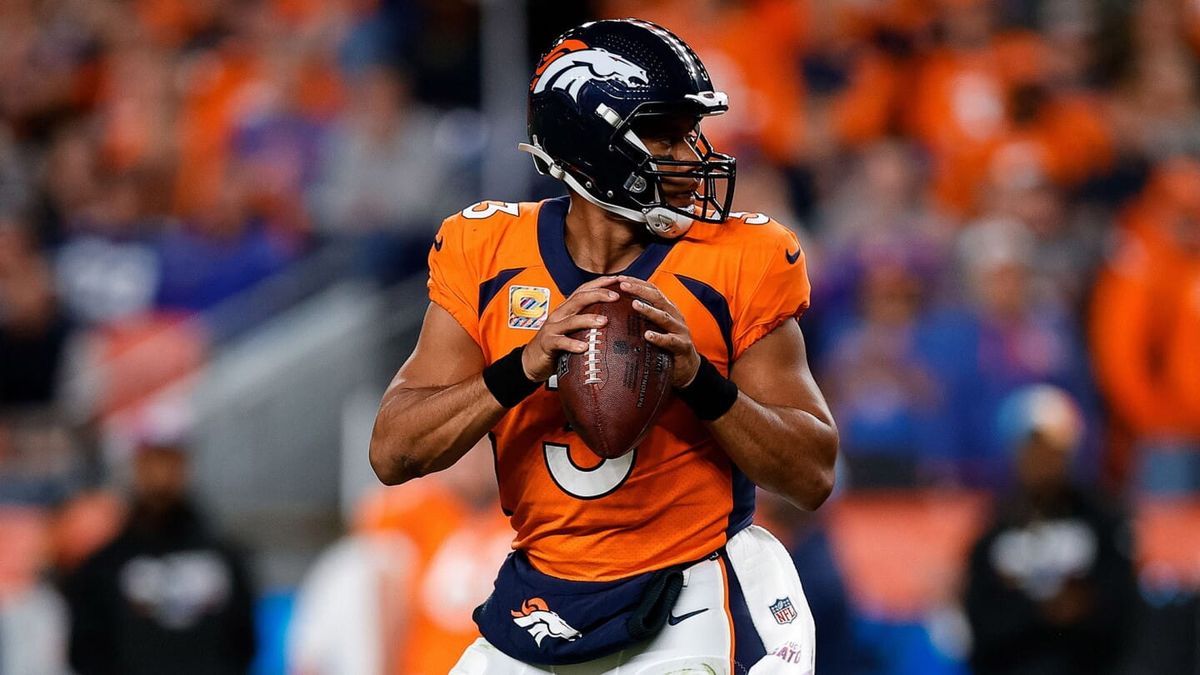
Russell Wilson’s NFL playing career appears to be over.
On Monday, multiple reports surfaced that Wilson was finalizing a deal to join CBS Sports as an analyst for the network’s pregame show, a move that likely closes the book on a 14-year career that included a Super Bowl championship, 10 Pro Bowl selections, and one of the most fascinating quarterback arcs in modern NFL history.
For Denver Broncos fans, however, Wilson’s legacy will always be viewed through a different lens.
When the Broncos acquired Wilson in the spring of 2022, it felt like salvation for a franchise drifting.
After years wandering the quarterback wilderness following Peyton Manning’s retirement, the Broncos finally had their answer. A Super Bowl-winning quarterback. A proven leader. A player many believed was still squarely in his prime.
The trade itself was massive – two first-round picks, two second-round picks, a fifth-round pick, and multiple players sent to the Seattle Seahawks – but the reaction was overwhelmingly positive. Nationally, the consensus was that Denver had fleeced the Seahawks. The Broncos didn’t just get a quarterback; they got credibility back overnight.
Less than two years later, Wilson was gone – benched, released, and remembered as one of the most jarring miscalculations in franchise history. The gamble on Wilson didn’t pay off – it backfired.
The Arrival: Belief Returns to Denver
Wilson’s arrival immediately changed the tone around the Broncos.
Denver handed him a massive contract extension before he ever took a snap, signaling complete organizational buy-in. The roster looked ready-made to compete: a talented defense, young skill players, and a city starving for relevance again.
The expectations were not subtle. This was supposed to be the move that ended the post-Manning malaise. Anything short of contention felt unacceptable.
At first, even the optimism felt justified.
A Warning Shot: Week 1 in Seattle
Wilson’s first game as a Bronco came against his former team at Lumen Field – a storyline too perfect to ignore.
Denver moved the ball well for much of the night, but most drives ended with either field goals or punts, which kept the score tight. Then came the defining moment: down one point, with time expiring, then-Broncos head coach Nathaniel Hackett chose to attempt a long field 64-yard goal rather than trust Wilson on fourth-and-short. The kick missed, and Denver lost.
While the decision belonged to Hackett, the image stuck: the Broncos had traded the future for a quarterback that their head coach didn’t fully trust in the game’s biggest moment. What should have been a triumphant debut instead planted the first seed of doubt.
When Hope Turned to Despair
As the 2022 season progressed, the problems became impossible to ignore. Denver's offense struggled to consistently sustain drives – a symptom of an attack that ranked last in the NFL in third-down conversions at just 29.1%. The Broncos also finished 32nd in scoring at 16.9 points per game, underscoring how few drives ended in points even when Denver managed to move the ball.
The first major low point of the 2022 season came in Week 5 against the Indianapolis Colts on Thursday Night Football – a nationally televised disaster. Wilson threw two fourth-quarter interceptions, including one that gave the Colts possession with just over two minutes remaining. Indianapolis capitalized, driving for a game-tying field goal to force overtime.
Overtime provided no relief for the Broncos. Denver failed to score, eventually falling 12-9 in a game widely ridiculed as one of the worst primetime matchups in recent NFL history.
It wasn't just that the Broncos lost. It was how they lost – slowly, awkwardly, and without answers. Denver’s offense looked hopelessly bad.
Wilson’s postgame optics after the embarrassing loss to the Colts only made matters worse. After another frustrating offensive performance, Wilson closed his press conference with his now-infamous refrain: “Broncos Country, Let's Ride.” What was intended as optimism increasingly felt disconnected from the reality unfolding on the field.
By December, the pattern was cemented. In a Week 13 loss to the Baltimore Ravens, Denver failed to score a touchdown and managed just nine points despite forcing a close game throughout. Wilson avoided turnovers but threw for only 189 yards while the Broncos punted seven times. Another strong defensive effort went wasted as the offense failed to deliver when needed.
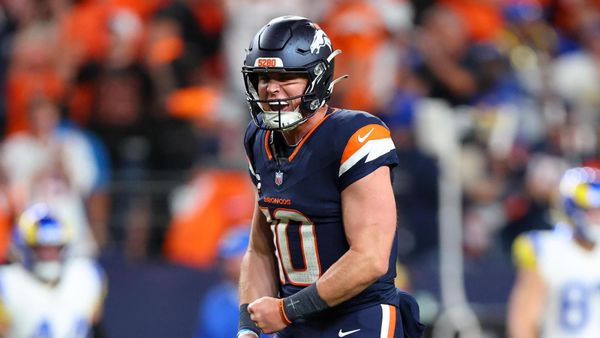
Then came a Week 16 clash against the Los Angeles Rams on Christmas Day – the moment the season finally collapsed under its own weight. Against a struggling Rams team without Matthew Stafford under center, Denver was embarrassed 51-14 in a game that felt less like an NFL contest and more like a public unraveling. Wilson threw three interceptions, was sacked six times, and looked completely overwhelmed as the offense spiraled from the opening quarter on.
The defense, once the lone source of pride, broke completely under the strain. Whatever belief remained in the Wilson-Hackett partnership evaporated in real time.
That beatdown proved to be the final straw. Less than 24 hours later, the Broncos fired Nathaniel Hackett, ending his tenure just 15 games into his first season. Denver was 4-11 at the time and would finish the year 5-12, a stunning outcome for a team that entered the season with playoff expectations.
The disappointment extended beyond the field. As the Broncos prepared for the 2023 season, reports emerged that Wilson had his own office at team headquarters and maintained a level of autonomy unusual for a quarterback still trying to establish himself within a new organization. Fair or not, those stories only reinforced the growing perception that something about the Wilson experiment never fully fit in Denver.
The Illusion of a Rebound
When the Broncos hired Sean Payton to lead the franchise in 2023, his arrival brought immediate structure – and immediate tension.
On paper, Wilson rebounded. His touchdown totals rose. Interceptions dropped. Efficiency metrics improved enough to quiet the loudest statistical critiques from 2022. Compared to the prior season's chaos, it looked like progress.
But football, of course, isn't played on spreadsheets.
The early weeks of 2023 exposed how fragile the partnership really was.
In Week 3, Denver suffered a 70-20 loss to the Miami Dolphins – one of the most lopsided defeats in franchise history. The scoreline was staggering, but more alarming was how powerless the Broncos looked. The offense never found rhythm, never applied pressure, and never suggested it could match elite competition.
Two weeks later came another gut punch.
A 31-21 loss to the New York Jets in Week 5 carried layers of embarrassment. Nathaniel Hackett – fired by Denver less than a year earlier – was now the Jets’ offensive coordinator. This was the same Hackett that Payton had publicly blasted in the offseason, calling his 2022 work with the Broncos “one of the worst coaching jobs in the history of the NFL.”
Wilson’s stat line against New York wasn’t disastrous. He completed 20 of 31 passes for 196 yards, two touchdowns, and no interceptions.
But that was part of the problem. The performance was competent, efficient, and ultimately insufficient.
Denver hadn’t traded for Wilson to be merely serviceable; it had traded for a quarterback capable of elevating a franchise. Instead, games like this increasingly reflected the reality of Wilson's 2023 season – respectable production that rarely translated into the type of impact expected from a player of his pedigree.
At 1-5 following a disheartening 19-8 loss to the Kansas City Chiefs in Week 6, the season appeared lost.
Then came the surge. The Broncos rattled off five straight wins to climb back to 6-5, fueled largely by defensive takeaways, short fields, and disciplined game management. Wilson made timely plays, avoided mistakes, and did enough to help Denver win – but rarely took over games. The victories felt fragile, relying more on containment than command.
When the margin for error narrowed, the doubts returned.
The Broncos lost three of their next four games, including a crushing 26-23 defeat to the lowly New England Patriots on Christmas Eve – a loss that all but ended their playoff hopes. Down 23-7 entering the fourth quarter, Denver mounted a late rally to pull even, but the surge came too late. The offense spent three quarters struggling to find rhythm, forcing the Broncos into desperation mode instead of sustained control when it mattered most.
The Breaking Point
A few days after Denver’s heartbreaking loss to the Patriots, Wilson was benched.
The decision wasn’t framed as performance alone, but the message was unmistakable. Despite improved numbers, the trust was gone. Payton’s offense demands anticipation, timing, and decisive control – traits Wilson flashed at times but never sustained over full games or extended stretches.
The statistics said rebound, but the film said limitation. And by the end of 2023, the gap between the two could no longer be ignored.
Beneath the surface, the benching wasn’t purely about football anymore. Wilson’s contract included a $37 million injury guarantee tied to his 2025 salary – money that would have become fully guaranteed if he failed a physical in March of 2024 due to an injury suffered late in the 2023 season. With playoff hopes on life support, the Broncos approached Wilson about restructuring or deferring that guarantee to protect the franchise from long-term risk, but Wilson declined.
The standoff crystallized what had already been building. Trust between quarterback and organization had eroded to the point where financial concerns, football philosophy, and leadership questions all collided. The benching became less about a single game and more about an inevitable separation both sides could see coming.
In March of 2024, Denver released Wilson, absorbing massive dead cap money to move on entirely. It was a stunning admission – and a necessary one.
The Final Stops
Wilson’s release from the Broncos did not mark the end of his NFL career.
In 2024, he landed with the Pittsburgh Steelers, a franchise known for stability and playoff expectations. The partnership wasn’t perfect, but it was functional. Wilson posted respectable numbers, helped guide the Steelers to a 6-5 record in his starts, and earned his 10th Pro Bowl selection.
Compared to the dysfunction that defined his tenure in Denver, Pittsburgh provided a more stable environment. Wilson looked more comfortable operating within structure and managing games. While he was no longer the dynamic playmaker who once terrorized defenses with the Seahawks, he showed enough to prove he could still function as a capable NFL starter.
Yet the Steelers’ actions spoke volumes.
Despite making the playoffs and receiving Pro Bowl recognition, Pittsburgh showed little urgency to keep Wilson beyond the 2024 season. Rather than commit to him as their long-term answer, the Steelers allowed Wilson to leave in free agency. The decision reflected a growing league-wide reality: Wilson could still help a team win games, but few organizations viewed him as a quarterback capable of elevating a franchise.
That reality became impossible to ignore during his final NFL stop.
Wilson signed with the New York Giants in 2025 hoping to extend his career and stabilize a team searching for answers at quarterback. Instead, the season became another reminder of how quickly time catches even the game’s most accomplished players. Wilson lost his grip on the starting job after the Giants suffered a frustrating 22-9 loss to the Kansas City Chiefs in Week 3.
By the end of the 2025 season, the trajectory was clear. Wilson was no longer being evaluated as a franchise quarterback but as a veteran bridge option. The conversation had shifted from what he could become to what he had been.
When reports surfaced on Monday that Wilson was joining CBS Sports as an analyst, the move felt less like a surprise than a natural next step. His playing career had stretched beyond many expectations following his departure from the Broncos, but neither Pittsburgh nor New York provided the late-career renaissance that could fully restore his standing among the league’s elite quarterbacks.
Instead, those final stops served as confirmation of what Denver had already concluded: Russell Wilson could still contribute, but the version of the player who once looked destined for Canton had largely been left behind in Seattle.
Did Russell Wilson’s Broncos Tenure Really Ruin His Hall of Fame Case?
Before joining Denver, Russell Wilson possessed a Hall-of-Fame résumé.
He was a Super Bowl XLVIII champion, a nine-time Pro Bowler, and a Second-Team All-Pro. Wilson led the NFL in passer rating in 2015 and in passing touchdowns in 2017, guiding the Seahawks to eight playoff appearances across ten seasons. It was a decade defined by sustained excellence, consistency, and winning at the highest level.
But legacies are fragile – and perception matters. In the NFL, how a career ends can linger longer in memory than how it began.
Wilson’s tenure with the Broncos didn't merely stall his career; it reframed it. Questions about his leadership, adaptability, and decline followed him out the door. Whether fair or not, his two seasons with Denver reshaped how the latter stages of his career would be viewed.
His post-Broncos stops with the Steelers and Giants did little to change that narrative. While Wilson earned a Pro Bowl selection in 2024 and briefly showed he could still function as a capable starter, neither Pittsburgh nor New York viewed him as a long-term answer. By the end of his career, the conversation surrounding Wilson centered less on what he had accomplished and more on how dramatically his trajectory had shifted from his Seahawks peak.
That said, it’s an overreach to claim Wilson played himself out of the Hall of Fame. He may no longer project as a first-ballot inductee, but a difficult final chapter does not erase a decade of elite quarterback play in Seattle. His résumé remains strong enough to withstand the disappointing stretches that followed.
What is fair to say is this: Wilson’s time in Denver did nothing to strengthen his Hall-of-Fame case, and the seasons that followed offered little opportunity to reclaim the momentum he had lost. The Broncos chapter wasn't a career undoing, but it marked the beginning of a decline that neither the Steelers nor the Giants could reverse.
It wasn’t the chapter that defined Wilson’s legacy, but it was the chapter that changed it.