Should the Broncos Cut Evan Engram?

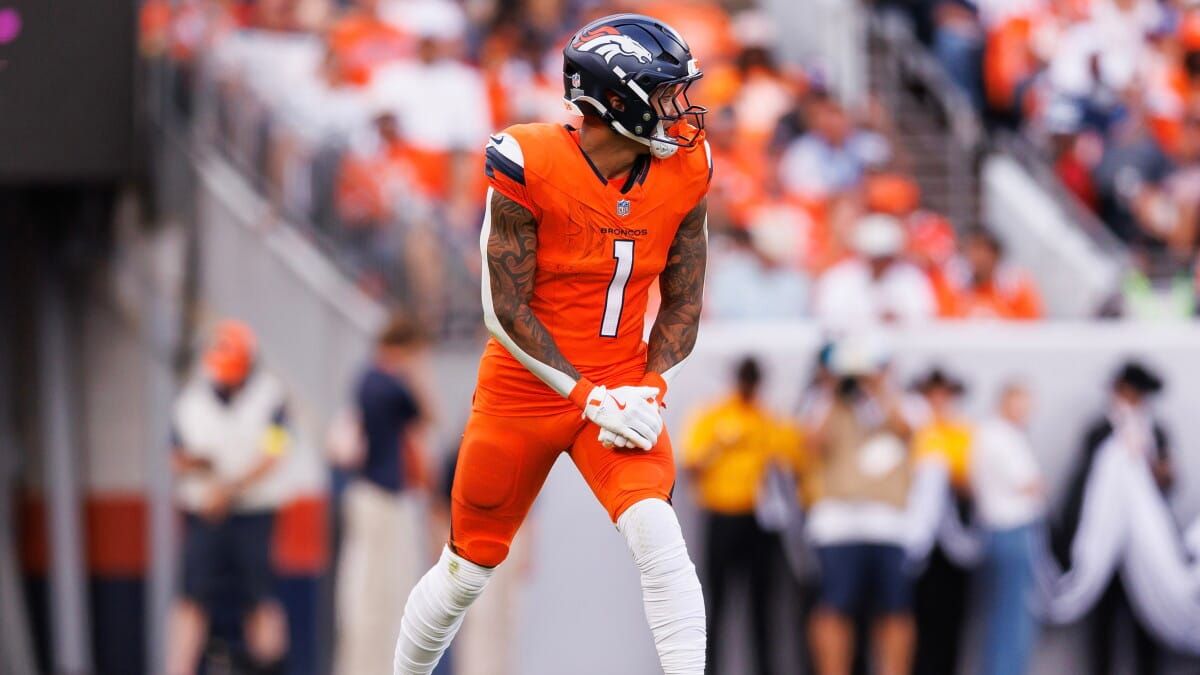
When the Denver Broncos signed Evan Engram to a two-year, $23 million contract during the 2025 offseason, the expectation was that he would provide Bo Nix with a proven receiving threat at tight end.
Instead, Engram's first season with the Broncos was largely underwhelming.
The two-time Pro Bowler finished the 2025 campaign with 50 receptions for 461 yards and just one touchdown. While those numbers aren't terrible for a tight end, they fell well short of the impact Denver hoped to receive from one of the most accomplished pass-catching tight ends available in free agency.
With Engram now entering his age-32 season and the Broncos making several moves to reshape their tight end room this offseason, it is fair to wonder whether Denver would be better off moving on.
From a financial standpoint, there is certainly a case to be made.
If the Broncos designated Engram as a post-June 1 release, they would save approximately $6.47 million against the 2026 salary cap while absorbing a $7.67 million dead money charge. For a team that has spent aggressively to surround Nix with talent, creating additional cap flexibility could be appealing.
However, while the financial savings are tempting, Denver is likely better off keeping Engram on the roster for at least one more season.
The Broncos’ Tight End Room Still Needs a Veteran Receiver
Denver made a clear effort to bolster its tight end room this offseason.
The Broncos selected Justin Joly and Dallen Bentley in the 2026 NFL Draft and re-signed Adam Trautman, Nate Adkins, and Lucas Krull.
At first glance, that level of investment may make Engram appear expendable. A deeper look suggests otherwise.
Trautman, Adkins, and Krull all bring value to the roster, but none are natural replacements for Engram's role in the passing game.
Trautman has never reached 300 receiving yards in a single season. Adkins has just 185 receiving yards for his career. Krull has produced 29 receptions for 262 yards and one touchdown since entering the league.
Collectively, the trio has proven useful as blockers, special teamers, and role players. However, none have demonstrated the ability to consistently handle a featured receiving role, making them unlikely candidates to replace Engram's workload in the passing game.
If Denver were to move on from Engram, the responsibility of replacing his receiving production would likely fall on Joly or Bentley.
That may eventually happen, but it is a risky proposition for a team hoping to contend in 2026.
The Broncos' Rookie Tight Ends Still Have Questions to Answer
Bentley enjoyed a breakout season with the Utah Utes in 2025, catching 48 passes for 640 yards and six touchdowns. The production was impressive, but it also represented the first significant receiving output of his collegiate career.
Prior to his breakout campaign, Bentley totaled just three receptions for 20 yards across the 2023 and 2024 seasons combined.
That doesn't mean Bentley cannot become an impact player at the NFL level. It simply means Denver would be placing a considerable amount of faith in a player whose production history consists of one strong season.
Joly appears to be the more likely long-term successor to Engram.
Over the course of his collegiate career, Joly recorded 166 receptions for 1,978 yards and 15 touchdowns. He capped off his college career with seven touchdown receptions for the NC State Wolfpack in 2025 while consistently displaying strong hands, an impressive catch radius, and polished route-running ability.
Among the Broncos’ rookie tight ends, Joly arguably has the best chance of eventually becoming a featured receiving option.
The issue is that he remains a work in progress.
Joly entered the NFL with concerns about his blocking ability and will need time to develop into a more complete tight end. While his receiving skills could earn him immediate opportunities, asking him to become a full-time starter from Day 1 would place a significant burden on a rookie who still has clear developmental needs.
To be fair, Engram has never been known as a dominant run blocker either.
However, even after an underwhelming 2025 campaign, Engram still offers something Joly and Bentley cannot yet provide: proven NFL production.
Why Keeping Engram Makes Sense
Denver does not need Engram to play at a Pro Bowl level in 2026 to justify keeping him.
The Broncos simply need him to function as a bridge.
Tight end is one of the most difficult positions for rookies to master. Players must learn route concepts, pass protections, blocking assignments, and defensive recognition while adjusting to the speed and physicality of the NFL.
By keeping Engram, Denver can allow Joly and Bentley to develop at a reasonable pace rather than forcing either rookie into a starting role before they are ready.
That approach could ultimately benefit both players and the offense as a whole.
If either rookie significantly outperforms expectations during training camp and the preseason, the Broncos can always reevaluate the situation. Joly, in particular, possesses the receiving skill set to potentially accelerate his timeline.
At this point, however, that remains a projection rather than a certainty.
Denver spent the offseason adding to its tight end room, not searching for an immediate replacement for Engram. While Engram's first season with the Broncos was disappointing, the team's alternatives remain largely unproven.
For that reason, Denver should resist the temptation to create additional cap space and instead keep Engram as a veteran bridge option for one more season. His presence would allow the Broncos’ rookie tight ends to develop properly while giving Bo Nix an experienced target in the passing game.
Unless Joly or Bentley proves to be far ahead of schedule this summer, moving on from Engram would likely be a year too early.