Broncos 2026 Offseason Review: What They’ve Gotten Right and Wrong So Far

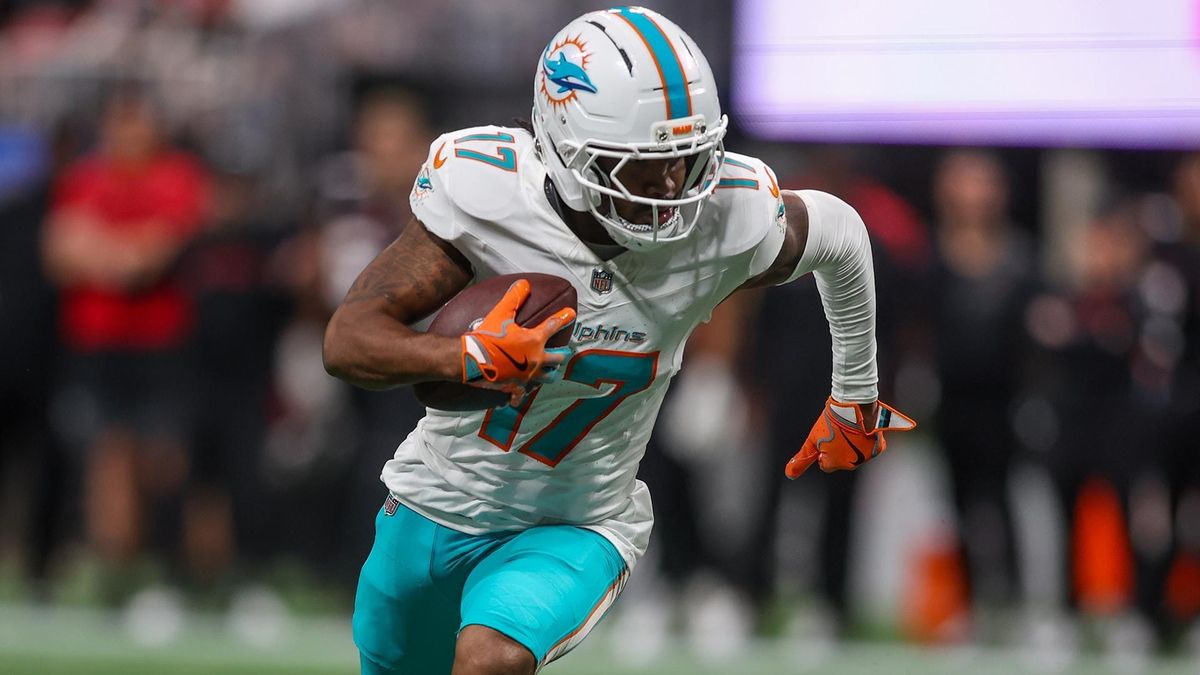
The Denver Broncos have taken a calculated approach to the 2026 offseason.
Rather than making splashy moves in free agency, the Broncos have focused on internal continuity while selectively adding talent that fits their long-term vision. For a team coming off a deep playoff run, that approach is understandable.
But just because a strategy is logical doesn’t mean it’s flawless.
Through the early stages of the offseason, Denver has made several moves worth praising – and a few that warrant criticism.
What the Broncos Got Right
1. Trading for Jaylen Waddle
If there’s one move that stands above the rest, it’s Denver’s decision to acquire Jaylen Waddle.
Waddle gives the Broncos something they previously lacked: a true game-breaking presence at wide receiver who can stress defenses horizontally and vertically. His speed and route-running ability make him an ideal complement to Courtland Sutton, forming a legitimate 1A/1B tandem.
More importantly, Waddle has already proven he can thrive in that type of role. During his time with the Miami Dolphins, he operated as the clear 1B alongside Tyreek Hill and still produced at a high level. After being selected sixth overall in the 2021 NFL Draft, Waddle posted at least 1,000 receiving yards in each of his first three seasons.
His 2022 campaign was especially impressive. Despite sharing the field with Hill – who exploded for 1,799 yards and 13 touchdowns – Waddle still racked up 1,356 receiving yards and eight touchdowns of his own, proving he doesn’t need to be the focal point of an offense to be highly productive.
Since entering the league, Waddle has accumulated 5,039 receiving yards – the 10th-most among all wide receivers over that span – further solidifying his consistency and impact.
He also showed in 2025 that he can step into a WR1 role when needed. After Hill suffered a season-ending torn ACL in Week 4 against the New York Jets, Waddle took over as the Dolphins’ top wideout. He finished the 2025 campaign with 910 receiving yards and six touchdown receptions – numbers that would have ranked second on Denver behind Sutton last season.
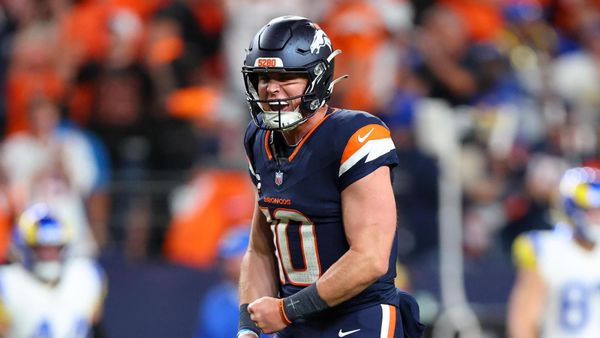
For a team building around quarterback Bo Nix, this type of addition is critical. Waddle not only raises the ceiling of the passing attack but also provides both stability and flexibility depending on how defenses choose to attack the Broncos’ offense.
It’s the kind of aggressive, forward-thinking move contending teams make.
2. Locking Down Key Defensive Contributors
Linebacker may not be the flashiest position, but production and reliability matter – and Denver made sure to keep both.
Alex Singleton continues to be one of the most consistent tacklers in the NFL. He led the Broncos with 135 total tackles in 2025 and has recorded at least 120 tackles in five of his last six seasons. He has also led Denver in total tackles in three of his four years with the team, making him the clear backbone of the defense.
Justin Strnad, meanwhile, proved in 2025 that he is far more than just a depth piece, showing the ability to impact games both in coverage and as a pass rusher.
In Week 7 against the New York Giants, Strnad delivered a game-changing fourth-quarter interception that helped fuel a stunning 33-32 comeback victory. The week prior against the Jets, he came up with a crucial late-game sack that stalled a potential game-winning drive, preserving a 13-11 win.
Those performances were clear signs of a player ready to take on a full-time role.
The Broncos also made a smart move in the secondary by placing a second-round tender on cornerback Ja'Quan McMillian, ensuring they retain one of their most underrated defensive playmakers.
McMillian has recorded at least two interceptions in each of the last three seasons and has totaled five forced fumbles and two fumble recoveries over that span. His impact goes far beyond the stat sheet.
In 2025 alone, McMillian made several game-altering plays. He recorded a game-clinching strip-sack in Denver’s season-opening win over the Tennessee Titans, added an interception and key third-down sack in a Week 11 victory over the Kansas City Chiefs, and returned an interception for a touchdown in a Week 18 win against the Los Angeles Chargers.
Perhaps most notably, McMillian intercepted Josh Allen in overtime of a Divisional Round clash with the Buffalo Bills to help set up the Broncos’ game-winning drive.
By retaining players like Singleton, Strnad, and McMillian, Denver preserved the core of a defense that consistently delivered in high-leverage moments.
3. Moving on from Dre Greenlaw
Parting ways with Greenlaw may not grab headlines, but it reflects a clear understanding of roster construction.
Availability matters – and Greenlaw simply hasn’t had it.
He played in just two games in 2024 and appeared in only eight games during the 2025 season. Even when he was on the field, he didn’t clearly separate himself from Strnad in terms of overall impact.
With no significant drop-off in performance between the two players, the Broncos made the logical decision to prioritize durability and continuity.
Rather than investing in a player with an inconsistent availability track record, Denver chose to stick with the more reliable option already within its system.
Sometimes the best move is choosing stability over uncertainty – and this was a textbook example.
What the Broncos Got Wrong
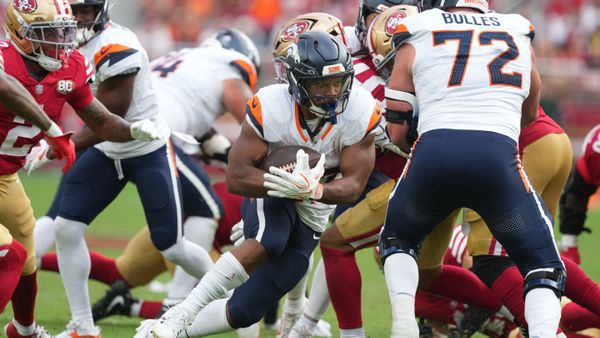
1. Re-Signing J.K. Dobbins Without Adding Competition
This is where things start to get shaky.
Dobbins is undeniably talented. When healthy, he’s one of the most efficient runners in the league. But that “when healthy” qualifier has defined his career.
Over six NFL seasons, Dobbins has played in more than 10 games just twice. He missed the entire 2021 season with a torn ACL, appeared in only eight games in 2022, and played just one game in 2023 due to a torn Achilles. That kind of injury history is impossible to ignore.
Relying on Dobbins as the centerpiece of the backfield – without adding a proven alternative – is a risky bet for a team with Super Bowl aspirations.
Denver learned this lesson the hard way in 2025. When Dobbins went down with a season-ending Lisfranc injury in the Broncos’ Week 10 duel with the Las Vegas Raiders, the running game became inconsistent, and the offense lost its balance.
Behind him, RJ Harvey profiles more as a complementary piece than a true every-down option. If Dobbins misses time again, Denver could find itself in a very familiar – and problematic – situation.
It’s understandable if the Broncos didn’t want to spend big money at the position, but there were affordable alternatives available. Veterans like Rico Dowdle and Tyler Allgeier – who ultimately signed with the Pittsburgh Steelers and Arizona Cardinals, respectively – offered proven production with far less concerning injury histories.
For a team this close to contention, passing on those types of options feels like a gamble that didn’t need to be made.
2. Re-Signing (and Overpaying) Adam Trautman
Continuity is one thing. Overpaying for it is another.
Trautman is a solid, dependable tight end who understands the system and contributes as a blocker. But his production as a pass-catcher simply hasn’t justified a significant financial commitment.
In 2025, Trautman caught just 20 passes for 195 yards and one touchdown. His career-high in receiving yards is only 263 – a mark he set back in 2021 with the New Orleans Saints – and he has never recorded more than three receiving touchdowns in a single season.
With six years of NFL production to evaluate, Denver knows exactly what Trautman is at this point: a low-volume receiving option with limited upside.
That’s what makes the three-year, $17 million extension difficult to justify.
In an offense still looking to maximize its young quarterback, allocating those resources to a player who offers minimal impact in the passing game feels like a missed opportunity – especially when more dynamic external options at the tight end position could have been explored.
It’s not that Trautman is a bad player. It’s that the value doesn’t quite match the investment.
Final Verdict: A Solid Foundation – With Some Risk Built In
Overall, the Broncos have had a disciplined offseason – and one that has, on balance, featured more smart decisions than questionable ones.
The addition of Jaylen Waddle gives the offense a much-needed spark, while retaining key defensive contributors preserves the identity of a unit that has been consistently reliable.
But the lack of urgency at running back – combined with questionable spending at tight end – introduces avoidable risk.
For a team on the brink of serious contention, the margin for error is thin.
Denver has done a lot right. The question now is whether those few missteps prove costly when the margin for error inevitably tightens.