How Do the Broncos Stack Up Against Denver’s Other Major Pro Sports Franchises?

Success in professional sports is measured in banners, legacies, and sustained relevance. In Denver, four franchises define the city’s modern sports identity: the Denver Broncos, Denver Nuggets, Colorado Avalanche, and Colorado Rockies. Each has delivered moments that shaped generations of fans.
But when viewed through a historical lens – championships, consistency, national impact, and cultural relevance – how do they truly stack up against one another? The answer requires more than counting titles. It requires weighing longevity, league stature, and how each franchise has defined Denver on the national stage.
4. Colorado Rockies (MLB)
The Rockies occupy a frustrating place in Denver’s sports hierarchy. Since their inaugural season in 1993, they have never won a division title and have reached the postseason just five times. Colorado’s lone World Series appearance in 2007 – while memorable – ended in a sweep.
That 2007 run, however, produced some of the most electric moments in franchise history. Game 163 against the San Diego Padres – a 9-8, 13-inning thriller to clinch the NL Wild Card – remains one of the most memorable nights at Coors Field. Matt Holliday’s headfirst slide home in the 13th inning of Game 2 of the NLCS against the Arizona Diamondbacks, along with Todd Helton recording the final out of the pennant-clinching victory, stand as the high-water marks of Rockies baseball.
The franchise has produced individual stars, most notably Helton, Holliday, 1997 National League MVP Larry Walker, Troy Tulowitzki, and Nolan Arenado, but sustained organizational success has proven elusive. Recent history has only deepened that divide, with a 119-loss season in 2025 ranking among the worst campaigns in modern MLB history. For a franchise more than three decades old, that level of collapse underscores long-term instability.
Coors Field remains one of baseball’s most vibrant venues, but attendance does not equal achievement. When division titles remain elusive and postseason appearances are rare, the résumé simply does not compare. Historically, the Rockies rank fourth among Denver’s major franchises – and the gap is significant.
3. Denver Nuggets (NBA)
For much of their existence, the Nuggets were known more for entertainment than championship contention. That narrative shifted dramatically in 2023 when Denver captured its first NBA title, validating decades of incremental growth. The championship elevated the franchise into a new historical tier.
Even before the title, there were flashes of postseason magic. The eighth-seeded Nuggets stunned the top-seeded Seattle SuperSonics in the First Round of the 1994 NBA Playoffs – the league’s first 8-over-1 upset. In 2009, Carmelo Anthony’s walk-off three-pointer against the Dallas Mavericks in Game 3 of the Western Conference Semifinals gave Denver an insurmountable 3-0 series lead and helped propel the Nuggets toward their first conference finals appearance in decades.
The modern era has redefined expectations. Jamal Murray’s electric performance in the 2020 NBA Bubble helped Denver overcome consecutive 3-1 series deficits to reach the Western Conference Finals. At the center of it all is three-time NBA MVP Nikola Jokić, whose 182nd career triple-double against the Chicago Bulls on February 7, 2026, moved him past Oscar Robertson for the second-most in NBA history and further cemented his trajectory as an all-time great. One of the most iconic moments of his Nuggets career came against the Los Angeles Lakers during the 2023 Western Conference Finals, when he buried a 28-foot step-back three-pointer over Anthony Davis at the third-quarter buzzer in Game 1 – a tone-setting moment in a series Denver ultimately swept 4-0.
The 2020s represent the most successful stretch in Nuggets history. For the first time, Denver sits confidently among the NBA’s elite rather than chasing validation. Still, compared to the Broncos and Avalanche, the Nuggets lack decades of championship history – though their trajectory suggests that gap may continue to shrink.
2. Colorado Avalanche (NHL)
Few teams in Denver sports history have burned brighter at their peak than the Avalanche. Since arriving in 1995, the franchise has captured three Stanley Cup championships and established itself as one of the NHL’s premier organizations. Their championship rate relative to years in Denver is remarkable.
Colorado’s early dominance was immediate and dramatic. The 1996 Western Conference Semifinals against the Chicago Blackhawks featured four overtime games in six contests, cementing the team’s reputation for postseason resilience. That same era also birthed one of hockey’s fiercest rivalries, punctuated by the infamous “Bloody Wednesday” clash with the Detroit Red Wings in 1997.
Led by Joe Sakic and Patrick Roy, the Avalanche blended skill with edge. Roy’s famous “spin-o-rama” deke of Wayne Gretzky became a defining image of Colorado’s swagger, while the 2001 Stanley Cup run reinforced its championship pedigree. The Avalanche’s first title in 1996 was secured in unforgettable fashion, when Uwe Krupp scored the series-clinching goal in triple overtime of Game 4 of the Stanley Cup Final. Decades later, superstars Nathan MacKinnon and Cale Makar powered another title push, highlighted by an 8-6 Game 1 win over the Edmonton Oilers in the 2022 Western Conference Finals – a series Colorado would sweep en route to its third Stanley Cup.
While hockey may not command football’s national footprint, the Avalanche are a powerhouse brand within Denver. Their championship pedigree and sustained competitiveness place them firmly in the city’s top tier. Historically, they sit just behind the Broncos in overall influence but rival them in championship efficiency.
1. Denver Broncos (NFL)
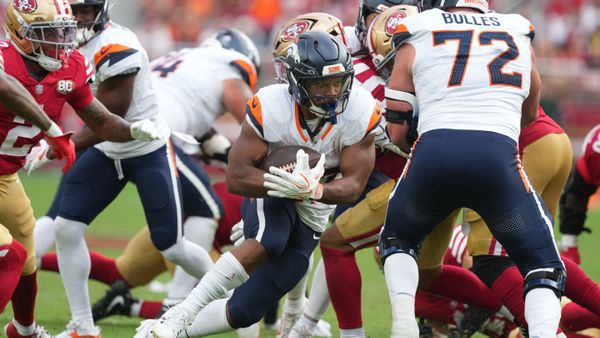
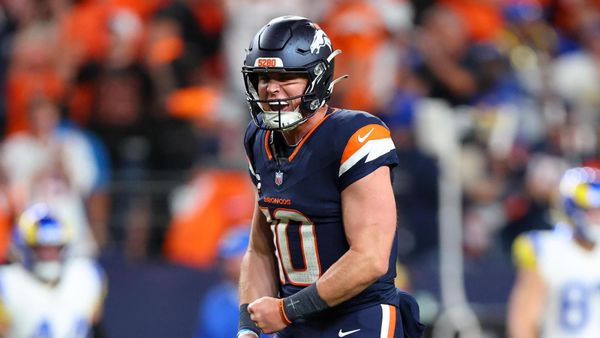
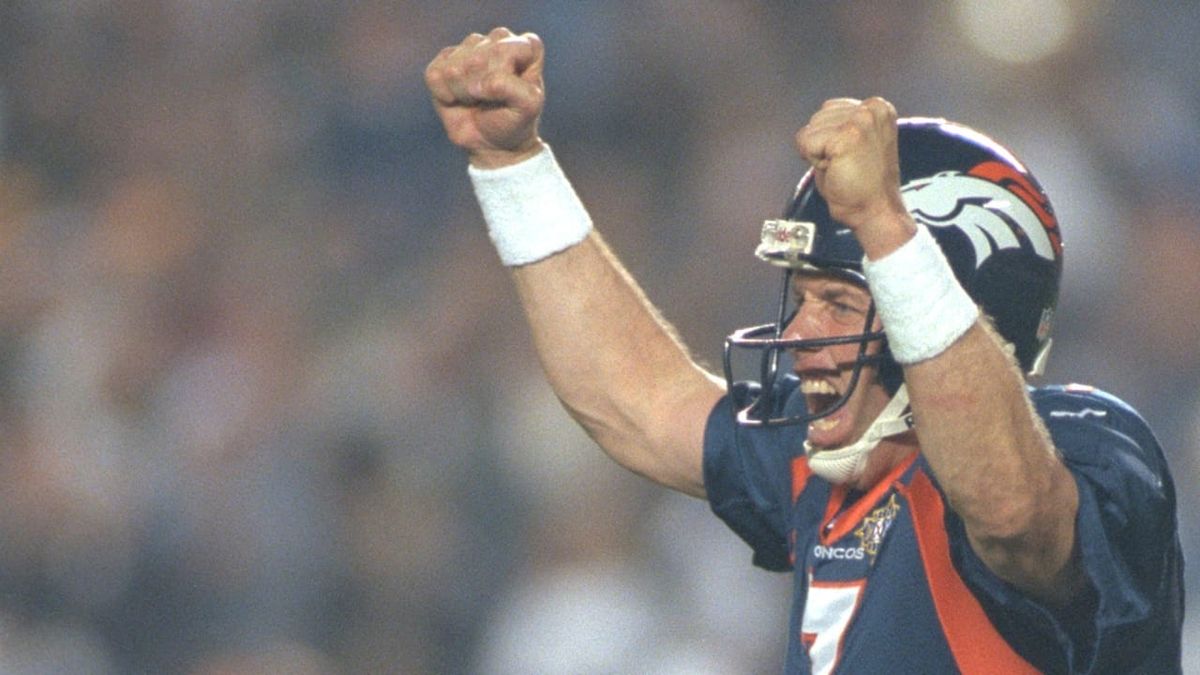
The Broncos are the cornerstone of professional sports in Denver. Since their founding in 1960, they have captured three Super Bowl championships and appeared in eight – tied for the second-most Super Bowl appearances in NFL history. For decades, the franchise has been a fixture in the national conversation.
From John Elway’s iconic “Helicopter” run in Super Bowl XXXII to Von Miller’s two strip-sacks in Super Bowl 50, the Broncos’ biggest stages have produced unforgettable moments. “The Drive” in the 1986 AFC Championship Game remains one of the defining sequences in NFL lore. Their championship runs were not flukes but the result of sustained excellence across eras.
From the “Orange Crush” lineage to the modern era, Denver has consistently produced defining figures. Hall of Fame safety Steve Atwater set the defensive tone during the franchise’s rise, while Terrell Davis delivered a performance for the ages in Super Bowl XXXII, rushing for 157 yards and three touchdowns despite battling a migraine. In 2013, Peyton Manning authored one of the greatest offensive seasons in NFL history by throwing for 5,477 yards and 55 touchdowns – reinforcing the franchise’s tradition of star-driven eras.
Football’s national dominance amplifies everything the Broncos do. When Denver contends, the entire region rallies behind them in a way no other local franchise quite replicates. Historically speaking, the Broncos set the standard in Denver, their championships and decades of relevance positioning them as the city’s most influential and consistently impactful professional franchise.
Final Assessment
When stacking Denver’s four major professional franchises side by side, the Broncos remain the city’s historical standard-bearer – but the Avalanche are not far behind. Backed by championship efficiency and sustained success across multiple eras, the Avalanche have built a résumé that closely rivals Denver’s most iconic franchise. There is, however, a more noticeable gap between those two and the Nuggets, who are rapidly ascending behind a generational superstar and beginning to close that distance. The Rockies, meanwhile, remain a distant fourth, still searching for sustained postseason relevance.
Sports legacies are never static. Another championship – or another collapse – can reshape perception quickly. For now, however, Denver remains a football city, with a championship-caliber hockey powerhouse closely behind it and a rising basketball contender working to bridge the gap.