Recent History Suggests Broncos May Not Find an RB1 in the 2026 NFL Draft

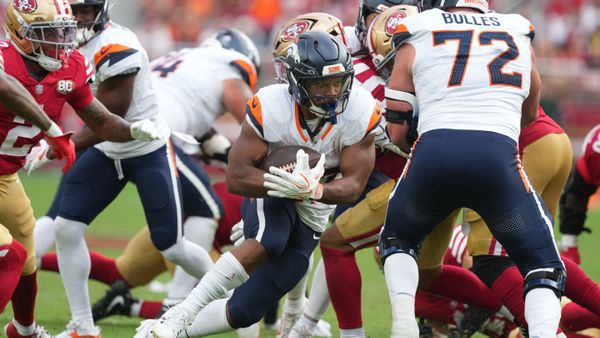
For a franchise once defined by dominant rushing attacks, the Denver Broncos have spent the better part of the last decade searching for answers at running back. From Floyd Little to Terrell Davis, the position used to be a strength – even an identity.
Since 2011, dating back to the implementation of the rookie wage scale, sustaining that identity has proven to be challenging.
The Broncos have drafted nine running backs over that span, ranging from Day 2 investments to late-round depth pieces. The results have been mixed at best, with flashes of production but no long-term, high-end solution emerging from the group.
Ronnie Hillman (2012, Round 3): Production Without Postseason Impact
Ronnie Hillman carved out a meaningful role during the Peyton Manning era, using his speed to complement a pass-heavy offense. He finished the 2015 regular season as Denver’s leading rusher, totaling 863 yards and seven touchdowns.
But when the stakes rose, his impact diminished.
Hillman managed just 54 rushing yards during the Broncos’ 2015 postseason run, reinforcing his profile as a complementary piece rather than a running back the offense could lean on when it mattered most.
Montee Ball (2013, Round 2): A Rapid Decline
Montee Ball arrived in Denver with massive expectations but never found consistency.
After averaging 4.7 yards per carry as a rookie in 2013, Ball’s efficiency dropped to 3.1 in 2014. He suffered a groin injury in Week 5 of the 2014 campaign, which led to the emergence of C.J. Anderson, who made the Pro Bowl that season.
By the 2015 preseason, the decline had fully set in. Ball rushed for just 68 yards on 32 carries – a 2.1 yards-per-carry average – before being released. He finished his Broncos career with 731 rushing yards and five touchdowns.
Devontae Booker (2016, Round 4): Early Volume, Limited Growth
Devontae Booker delivered his most productive season immediately, rushing for 612 yards and four touchdowns as a rookie in 2016 – numbers that ultimately stood as career highs.
While he provided versatility and reliability, his role steadily diminished. After his rookie season, Booker never eclipsed 300 rushing yards in a single year.
By 2019, his final season in Denver, he had fallen to third on the depth chart and managed just 66 yards from scrimmage across 16 games.
De’Angelo Henderson (2017, Round 6): A Brief Flash
De’Angelo Henderson’s impact for the Broncos was minimal, but not entirely without a moment.
He finished his lone season in 2017 with just 49 yards from scrimmage, with 29 of those yards coming on a receiving touchdown against the Kansas City Chiefs in the regular-season finale.
That brief flash wasn’t enough to secure his place. Henderson was waived prior to the 2018 season.
Royce Freeman (2018, Round 3): A Role That Slipped Away
Royce Freeman appeared to be a solid complementary piece in Denver’s run game, rushing for 521 yards and five touchdowns as a rookie in 2018 – both career highs.
But his grip on the role didn’t last.
Freeman’s production declined in each of his three seasons with the Broncos, finishing with 1,187 rushing yards and eight touchdowns before being released prior to the 2021 season.
David Williams (2018, Round 7): Preseason Promise, No Payoff
David Williams never appeared in a regular-season game for Denver, despite two separate stints with the team.
He showed flashes during the 2019 preseason, breaking off a handful of impressive runs against depth defenders, but it wasn’t enough to earn a spot on the 53-man roster.
Javonte Williams (2021, Round 2): Promise Interrupted, Then Realized Elsewhere
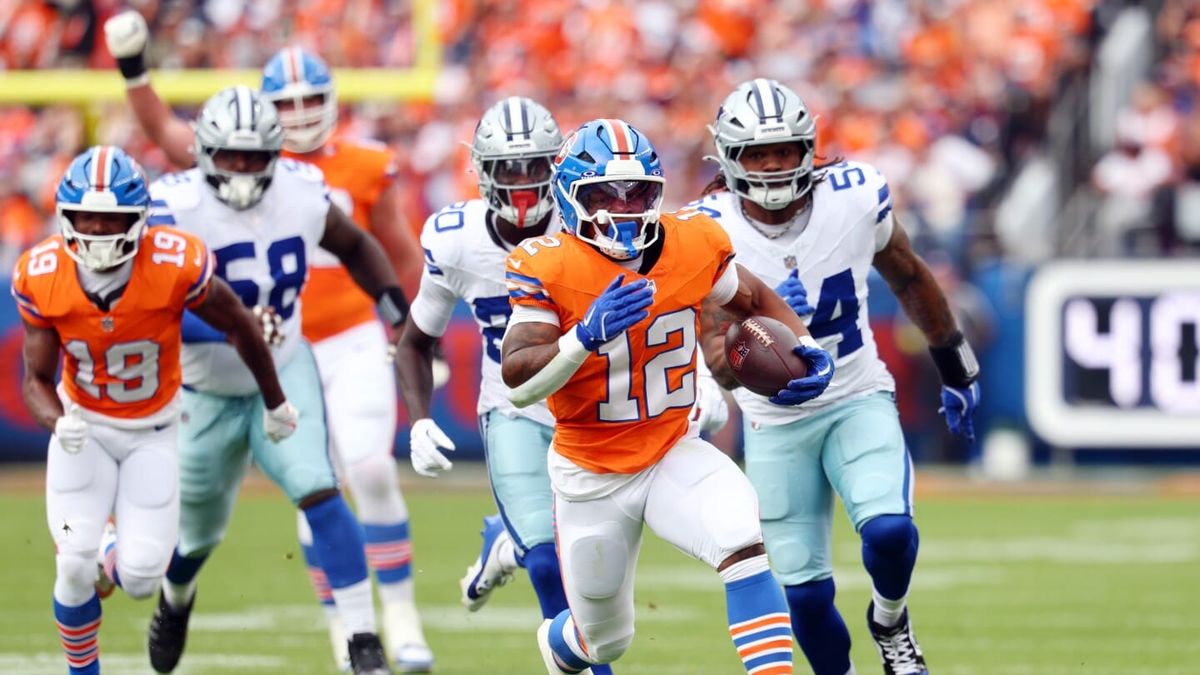
Javonte Williams looked like the answer early on. As a rookie in 2021, he rushed for 903 yards and four touchdowns while averaging 4.4 yards per carry, showcasing the physical, tackle-breaking style of a true RB1.
A torn ACL in 2022 changed everything.
His production waned in 2023 and 2024 as he worked his way back before ultimately signing with the Dallas Cowboys in 2025. There, he delivered a career year with 1,201 rushing yards and 11 touchdowns on 4.8 yards per carry, highlighting what he was capable of at full strength.
Audric Estimé (2024, Round 5): A Short-Lived Opportunity
Audric Estimé showed some promise in limited action, rushing for 310 yards and two touchdowns while averaging 4.1 yards per carry in 2024.
But his standing on the roster quickly slipped.
By the start of the 2025 preseason, Estimé had fallen to fifth on the depth chart and was ultimately waived before the season began.
RJ Harvey (2025, Round 2): Productive, But Not a Workhorse
RJ Harvey contributed as part of a committee backfield, particularly as a pass-catcher. He finished his rookie season with 540 rushing yards and seven touchdowns, adding 47 receptions for 356 yards and five touchdowns.
Alongside J.K. Dobbins, he filled a clear role.
But when Dobbins went down with a season-ending injury, Harvey’s struggles with rushing efficiency between the tackles were fully exposed. The Broncos’ offense became increasingly one-dimensional with Harvey, who averaged 3.7 yards per carry in 2025, in an expanded role as the RB1.
Final Thought
Since 2011, Denver has taken multiple swings at finding a potential long-term answer at running back through the draft.
None have fully panned out.
Some provided short-term production. Others showed flashes before fading. A few never got off the ground at all. And in at least one case, the talent surfaced – just not with the Broncos.
That doesn’t mean the process is broken. But it does highlight how difficult it is to find a true bell-cow back, even with repeated investment.
As Denver continues searching for stability in the backfield, the question remains: Not whether the Broncos will try again – but whether they’ll finally get it right.