Why the Broncos’ Run-It-Back Approach Comes With Real Risk

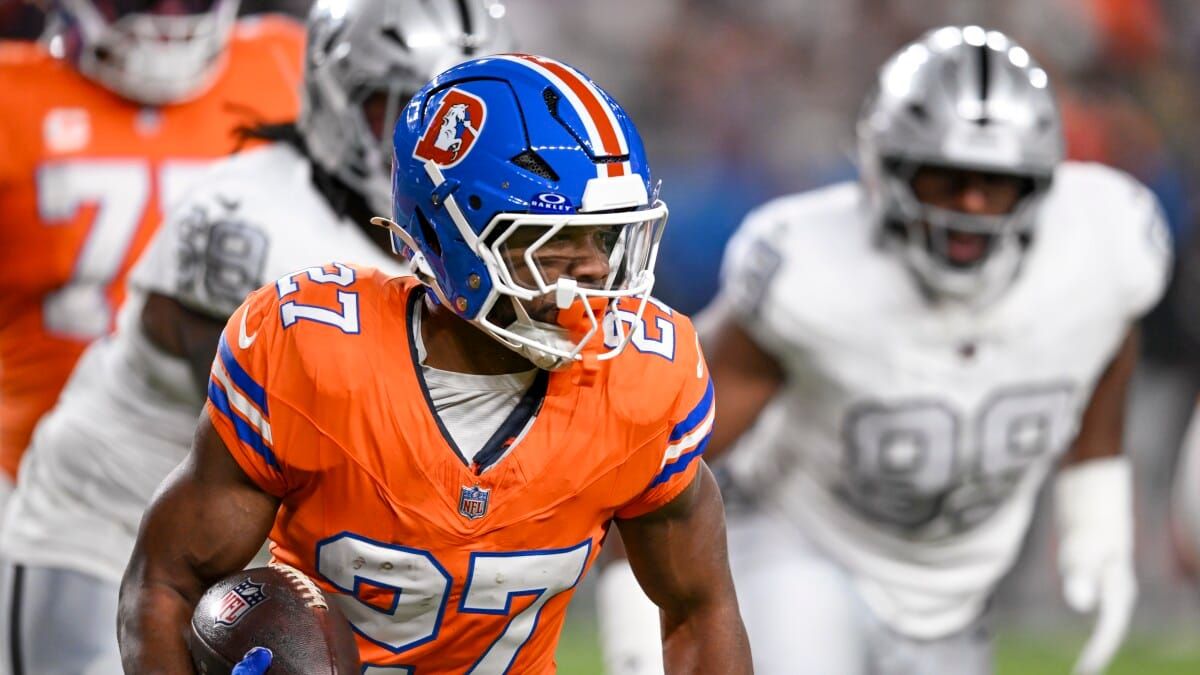
The Denver Broncos are taking a calculated approach to free agency this offseason – one built on continuity rather than splashy additions. As of this writing, they are the only team in the NFL that has not signed an external free agent this offseason.
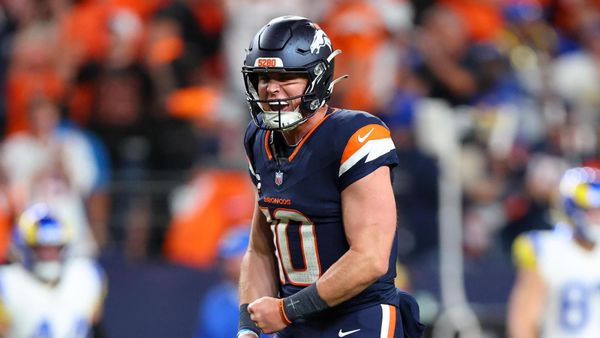
After a 2025 season that saw them fall just short of a Super Bowl appearance, it’s not hard to understand the logic. This is a young, ascending roster led by quarterback Bo Nix and anchored by one of the league’s best defenses.
But while continuity can be valuable, it doesn’t come without risk. And in the Broncos’ case, there are a few reasons this approach could prove more fragile than it appears.
A Tougher Road Ahead
One of the biggest reasons for caution has nothing to do with roster moves – it’s the schedule.
Denver thrived in close games last season, going 12-3 in one-score contests. That’s typically a sign of a resilient, well-coached team – but it’s also notoriously difficult to sustain year over year.
There’s a recent example that highlights the danger.
The Kansas City Chiefs went 11-0 in one-score games in 2024, only to fall to 1-9 in those same situations the following season. That kind of regression isn’t unusual – it’s expected.
Now, the Broncos face a significantly tougher path in 2026.
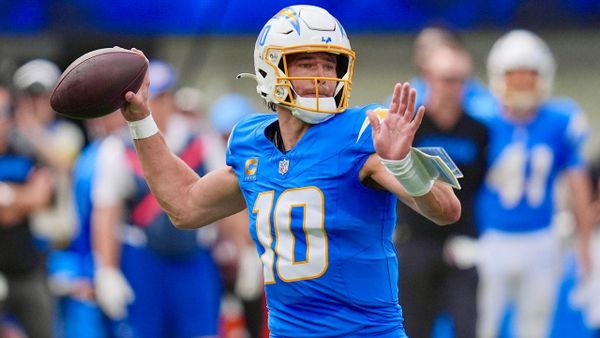
In addition to navigating the always-competitive AFC West, Denver will host several playoff-caliber teams, including the Buffalo Bills, Los Angeles Rams, Seattle Seahawks, and Jacksonville Jaguars – all of whom reached the postseason in 2025, with the Seahawks entering the year as the defending Super Bowl champions.
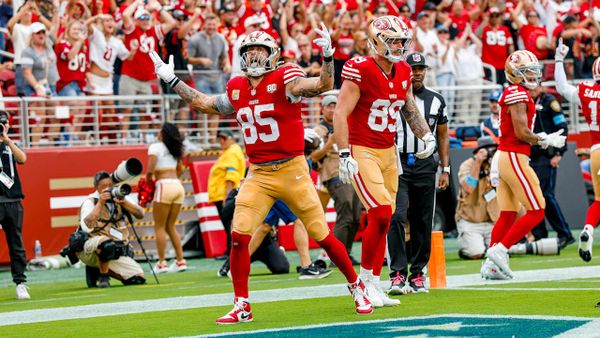
The road slate isn’t ideal, either. The Broncos will travel to face the defending AFC champion New England Patriots, along with playoff-caliber teams like the San Francisco 49ers and the scrappy Carolina Panthers.
That’s a far cry from the path they navigated a season ago.
In 2025, Denver was able to grind out close wins against teams like the Tennessee Titans, New York Jets, New York Giants, Washington Commanders, and Las Vegas Raiders (twice) – games that helped define its season but may not be as easy to replicate against a stronger slate of opponents.
With a tougher schedule and slimmer margins, simply running it back may not yield the same results.
Banking on Youth Is a Gamble
By staying quiet in free agency, the Broncos are placing a significant bet on internal development – particularly from their younger players and incoming draft class.
That’s not inherently a bad strategy. Teams are built through the draft.
But relying on young players to take immediate leaps is risky – especially under a coaching staff led by Sean Payton, who hasn’t historically leaned heavily on rookies outside of running backs.
There’s recent evidence of that approach in Denver.
In 2023, wide receiver Marvin Mims Jr. was primarily utilized as a return specialist and was sparingly used on offense despite being taken in the second round. Last season, first-rounder Jahdae Barron struggled to see the field early as a rookie, buried behind established cornerbacks like Patrick Surtain II, Riley Moss, and Ja’Quan McMillian on the depth chart.
The trend continued at wide receiver.
Pat Bryant, whom the Broncos selected in the third round of last year’s draft, was targeted just 49 times across 15 games in 2025. He caught just 31 passes for 378 yards and one touchdown across 15 games.
That raises an important question: if injuries strike or production dips, can Denver realistically expect its young players to step in and make an immediate impact?
Without proven reinforcements, the Broncos are asking a lot from players who may not be in position to deliver right away.
Continuity Doesn’t Automatically Mean Improvement
There’s also a more subtle concern with Denver’s approach: bringing back the same roster often means bringing back the same limitations.
The Broncos were an excellent team in 2025 – but not a flawless one.
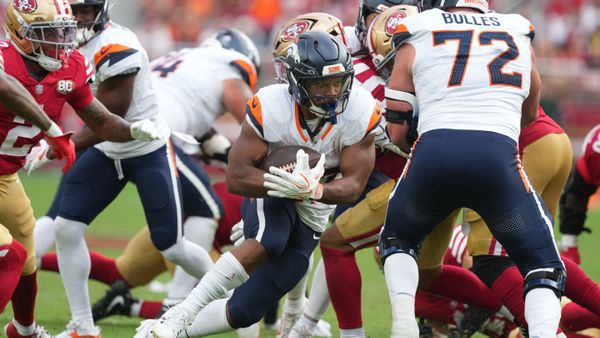
One of the biggest questions lies in the backfield. J.K. Dobbins has proven to be an effective runner when healthy, but availability has been a consistent concern throughout his career. He has played more than 10 games in just two of his six NFL seasons, making durability a legitimate question mark.
Behind him, Denver has RJ Harvey – a solid pass-catching complement, but not an efficient north-south runner. If Dobbins were to miss time, the Broncos would be without a reliable early-down presence – turning the run game into a potential liability.
There’s also risk in the passing game.
Despite Denver’s overall success last season, only Courtland Sutton and Troy Franklin eclipsed 500 receiving yards. That makes the Broncos’ decision not to add another proven weapon for Bo Nix a bold one – especially considering he’s still on a rookie deal.
If either Sutton or Franklin were to miss time, Denver could find itself lacking reliable options in the passing game, putting additional pressure on Nix to elevate a relatively thin group of playmakers.
Continuity can help a team grow – but it doesn’t automatically fix underlying weaknesses.
Final Verdict: A Smart Plan with a Thin Margin for Error
None of this is to say the Broncos are making the wrong decision.
Continuity matters. Development matters. And this is still a talented, well-coached team.
But this approach leaves very little margin for error.
If close-game luck swings the wrong way on a tougher schedule, Denver could be in trouble. If J.K. Dobbins can’t stay healthy, the Broncos’ hopes of making a Super Bowl LXI run might vanish. And if the lack of additional weapons around Bo Nix becomes an issue, Denver could face an earlier-than-expected playoff exit.
For a team on the verge of contention, that’s the real risk of running it back. Super Bowl windows don’t stay open for long in the NFL – and the Broncos can’t afford to waste this one.
Running it back is safe. Getting better is what wins championships.